


Table of Contents
- What You'll Need Before You Start
- Rolex Serial Number Lookup: Finding and Reading the Numbers
- How to Spot a Fake Rolex: Dial, Cyclops Lens, and Caseback Checks
- Weight, Movement, and Timekeeping: The Technical Checks
- Buying Pre-Owned Luxury Watches Safely: Paperwork and Provenance
- Post-Purchase Verification and Super-Clone Identification
- Conclusion: Get a Professional Inspection Before You Commit
- Frequently Asked Questions
Last Updated: October 1, 2026
What You'll Need Before You Start
Learning how to verify Rolex watch authenticity starts with the right tools and mindset. No single clue proves a watch is real. Instead, you build a case by checking many details together.
Here's what to gather before you begin:
- A jeweler's loupe (10x magnification) or a phone macro lens
- A soft cloth and good lighting
- A small digital scale that reads in grams
- The watch's paperwork, if you have it
- A calm, patient mindset
At Dunkin's Diamonds, we tell customers the same thing every time: professional physical inspection is the only reliable way to confirm a watch's legitimacy and provenance, according to Luxury of Watches' authentication guide. Visual checks help, but they are not the final word.
Rolex Serial Number Lookup: Finding and Reading the Numbers
A Rolex serial number lookup is a key step, but it is not proof on its own. Serial numbers are typically 4-8 digits long and engraved by the manufacturer.
Where the Serial and Model Numbers Sit on the Case
On most models, the serial number sits between the lugs at the 6 o'clock position, hidden behind the bracelet. The model number usually appears at the 12 o'clock side. You'll need to remove the bracelet or use a loupe at an angle to read them.
Engraving Quality and Movement Era Matching
Authentic engravings are clear and deep. Counterfeits often show blurred or irregular markings.
One detail most guides miss: the movement's production era should match the case serial number. A mismatch is a red flag, per Luxury of Watches.
Check |
What to Look For |
Red Flag |
|---|---|---|
Serial number |
4-8 digits, deep engraving |
Shallow or blurry etching |
Model number |
Matches reference |
Wrong font or spacing |
Movement era |
Aligns with case serial |
Mismatched production dates |
How to Spot a Fake Rolex: Dial, Cyclops Lens, and Caseback Checks
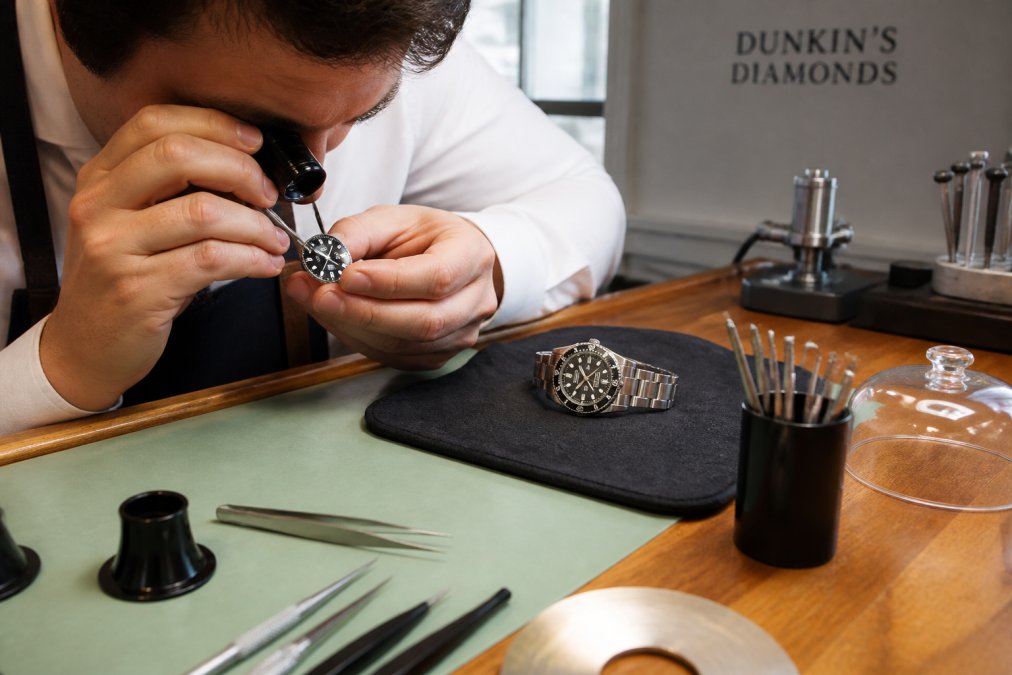
When learning how to spot a fake Rolex, the dial and lens tell a detailed story, but only if you know what to look for and how to document it. Genuine watches carry the five-point crown logo on the dial, crown, clasp, and bracelet. The trick is that counterfeiters know this too, so the giveaway is rarely the logo's presence, it's the precision of everything around it.
Dial Printing, Coronet Logo, and Rehaut
Start with the rehaut, the inner ring between the dial and crystal. On genuine watches, the engraved "ROLEX" repeats around the ring with even spacing and crisp, sharp-edged letters. Fakes often show uneven spacing, shallow etching, or letters that look painted rather than cut into the metal.
The coronet (the five-point crown) should be symmetrical, with clean, pointed tips and a consistent shape across the dial, crown, and clasp.
Cyclops Magnification, Caseback, and Bracelet Clasp
The Cyclops lens magnifies the date by 2.5x on a genuine Rolex, per Diamond Banc's 8-point checklist. A quick way to sanity-check this: the date should fill the lens window cleanly, with no distortion at the edges. Fakes frequently magnify less, or the date sits off-center.
A Macro-Photography Workflow Most Guides Skip
- Set up consistent lighting. Use a single, diffused light source and shoot from the same distance each time. Harsh, angled light hides engraving depth.
- Capture the rehaut at 12, 3, 6, and 9 o'clock. You're looking for even spacing and consistent letter depth all the way around, fakes often vary from one quadrant to the next.
- Shoot the coronet straight-on. Symmetry issues show up immediately in a flat, head-on shot.
- Photograph the date window through the Cyclops. Compare the magnification and the date's centering.
- Capture the clasp stamping and caseback engraving. Side-by-side comparison photos of a known-genuine reference are far more useful than memory.
One of the most important things we tell our customers is that these visual checks narrow the field, they don't close the case. Characteristics vary by model, reference, and production period, so the same detail that's correct on one Submariner may be wrong on another. That's why the dial and case inspection is a starting point, not a finish line.
Weight, Movement, and Timekeeping: The Technical Checks
Technical checks separate serious buyers from hopeful ones, but they also separate the fakes you can catch by eye from the ones you can't. This is where super-clones live, and it's where most DIY guides stop short.
What a Timegrapher Actually Tells You
Genuine Rolex movements run at 28,800 vibrations per hour (vph), according to Diamond Banc's authentication checklist. A watchmaker measures this with a timegrapher, a device that listens to the movement and reports its rate, amplitude, and beat error.
Here's what those readings mean in plain terms:
- Rate is how fast or slow the watch runs, measured in seconds per day. Genuine movements are typically adjusted to run within a tight range.
- Amplitude is how far the balance wheel swings. A healthy movement shows a strong, consistent swing; a worn or cheap movement shows a weak one.
- Beat error measures how evenly the tick and tock are spaced. A low beat error is a sign of a well-regulated movement.
Weight: A Clue, Not a Verdict
Authentic timepieces typically weigh 155-160 grams, per the same source. But weight varies significantly by model and materials, a two-tone Datejust and a solid gold Day-Date are nowhere near the same number. Treat weight as one data point, never proof.
How Super-Clones Defeat the Old Rules
This is the part most articles skip. High-end counterfeits, often called super-clones, are built to mimic genuine watches at a level that fools casual inspection:
- Sweeping second hand. A common mistake is assuming a sweeping second hand means the watch is real. Modern counterfeits mimic that motion, so the old "real Rolexes never tick" rule is unreliable.
- Movement finishing. Some super-clones replicate the decorative finishing, rotor engraving, and caliber markings closely enough to fool a quick look through a display back.
- Serial and model markings. Fakes may replicate these markings, which is why a serial number lookup alone can't authenticate a watch.
- Dial and rehaut detail. The best fakes get the printing and engraving close enough that only magnification reveals the difference.
Where Digital Tools Fit, and Where They Don't
At Dunkin's Diamonds, we understand that this is the stage where buyers feel most uncertain. When purchasing a previously enjoyed Rolex, ask the seller directly whether the movement has been inspected by a watchmaker and whether they can provide timegrapher readings. A confident, specific answer tells you a lot.

Buying Pre-Owned Luxury Watches Safely: Paperwork and Provenance
Buying pre-owned luxury watches safely comes down to paperwork and provenance. A warranty card, original box, and service records build a paper trail that supports authenticity.
When purchasing a previously enjoyed Rolex, ask for:
- Original warranty card with matching serial
- Service history from an authorized watchmaker
- A written authenticity guarantee from the seller
Post-Purchase Verification and Super-Clone Identification
Post-purchase verification protects you after the sale. Super-clones, high-end counterfeits built to mimic genuine watches, are the hardest to spot. They copy dial printing, weight, and even movement finishes.
Conclusion: Get a Professional Inspection Before You Commit
A Rolex is more than a watch. For many owners, it is an investment, a milestone, or a piece that can be enjoyed for generations. That's why getting it verified matters.
Frequently Asked Questions
Can I verify my Rolex serial number online?
You can look up a serial number to estimate the production year, but a lookup alone cannot confirm authenticity. Rolex serial numbers are 4 to 8 digits engraved between the lugs at the 6 o'clock position, and modern counterfeits often replicate these markings. Treat any lookup result as one piece of the puzzle, not proof. Only the manufacturer can definitively confirm authenticity through a full verification of the watch's original configuration and internal components.
How can I tell if my Rolex is real or fake?
Start with the details that are hardest to fake: deep, sharp engravings on the case and clasp, a Cyclops lens that magnifies the date by 2.5x, and a movement running at 28,800 vibrations per hour. Genuine watches carry the five-point crown logo on the dial, crown, clasp, and bracelet. Because characteristics vary by model, reference, and production period, no single clue is definitive. A professional physical inspection remains the only reliable way to confirm authenticity and provenance.
What is the most reliable way to verify a pre-owned Rolex?
Have it inspected by a qualified watchmaker or trusted jeweler before you buy. A proper authentication covers serial numbers, weight (authentic pieces typically fall in the 155 to 160 gram range), movement frequency, Cyclops magnification, materials, and documentation. When purchasing a previously enjoyed Rolex from a reputable seller, ask for the original paperwork, warranty card, and service history, and confirm the seller's return policy in writing.
Do all authentic Rolex watches have specific engravings?
Authentic Rolex engravings are clear and deep, but the exact markings vary by model, reference, and production year, so there is no single engraving that proves a watch is real. Counterfeits often show blurred or irregular etching by comparison. The five-point crown logo appears on the dial, crown, clasp, and bracelet, and the rehaut engraving should be crisp and evenly spaced. Use engraving quality as one signal among many, not a standalone test.

